
If a dog is allergic to something, they will usually show it from a young age. Common allergens can appear in your puppy’s food, as well as in the environment, such as pollen and dust mites. If your pup starts showing evidence of an allergy, you should consult a vet or a canine wellbeing specialist to determine the cause. If a food allergen is causing your puppy some problems, it’s time to change their food.
Our guide explores common food allergens in puppies, signs to look out for, and whether certain puppy food options can help with common skin allergies. We will also discuss the benefits of grain free puppy food, and we will answer some common queries to ensure you’re fully in the know!
- What Are Some Common Food Allergies in Puppies?
Identify some common allergens that are present in some puppy food options
- How Can I Tell If My Puppy Needs Hypoallergenic Food?
Here are some key indicators that your pup may have an allergy
- Can Certain Puppy Food Help with Skin Allergies?
Some puppy food options may be able to soothe skin allergies in puppies
- Is Grain Free Puppy Food a Good Option?
Grain free puppy food can be a great option, and not just for dogs with allergies
- Frequently Asked Question
We answer some common queries
What Are Some Common Food Allergies in Puppies?
Puppies tend to develop allergies after around six months old as their immune systems begin to mature. After this time, they may start to react to allergens that they have had prolonged exposure to. Common allergens present in food include:
- Proteins such as chicken and beef
- Dairy products like milk and cheese
- Wheat
- Soy
- Eggs
If your puppy’s current food contains any of these ingredients, it may be triggering an allergy. However, before swapping out your puppy’s food, consider booking a consultation with a canine nutrition specialist. Our experts can craft personalised diet plans based on your puppy’s needs, as well as your lifestyle, suggesting puppy food brands and supplements to help your pup live a healthy life right from the start.

How Can I Tell If My Puppy Needs Hypoallergenic Food?
Common signs your puppy may have an allergy and need hypoallergenic food include:
- Constant itching
- Skin that is red, inflamed or broken
- Nausea and vomiting
- Diarrhoea
- Ear infections that keep recurring
Puppy food brands such as Nourish Rite, which provide puppy food for both small and large breeds, are perfect for pups with allergies, promoting a grain-free diet free of proteins that often cause allergies.
The salmon flavoured Nourish Rite puppy food is perfect for all puppies, completely free of grain, artificial colours and preservatives.
Can Certain Puppy Food Help with Skin Allergies?
Yes, food options such as hypoallergenic puppy food can help pups with skin allergies, reducing allergic reactions by using ingredients that are less likely to trigger issues.
Hypoallergenic puppy food uses novel proteins such as duck or salmon, as well as easy-to-digest carbohydrates such as sweet potato. It also uses fewer ingredients in general to limit the exposure to allergens, and some options contain hydrolysed proteins that are broken down into tiny pieces.
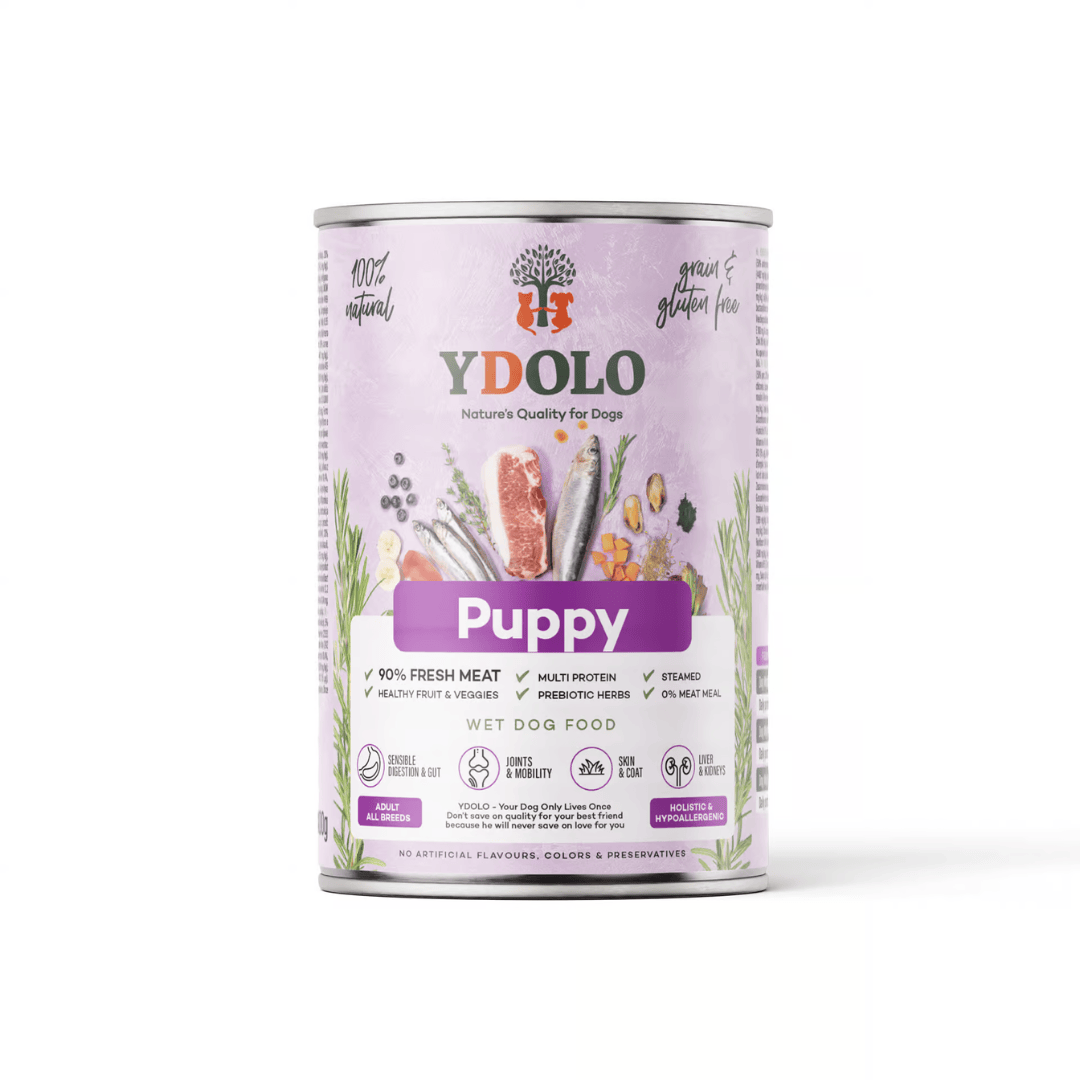
Ydolo wet puppy food is 100% hypoallergenic, natural and grain-free, ideal for pups with intolerances and sensitivities. It contains 90% pork, sardines and anchovies, perfect for helping with skin issues. The other 10% of Ydolo is vegetables, fruits and prebiotics, promoting cognitive functions and strengthening the immune system.
Browse the complete Ydolo dog food collection here.
Sadly, we no longer stock Ydolo. For an alternative wet dog food option, we recommend Naturo for a balanced diet. For a semi moist or cold pressed dog food alternative, try Cobbydog.
Is Grain Free Puppy Food a Good Option?
Grain-free puppy food can be a great, often crucial, option for puppies with sensitivities, intolerances and allergies. Grain-free puppy provides other benefits, such as improved digestion, a shinier coat and better energy levels. However, a product that is “grain-free” should not be relied upon at face value to give your puppy the nutrients they need.
At Fetch, we recommend the following grain-free puppy food brands:
- Nourish Rite: as mentioned previously, Nourish Rite produces dry puppy food for both large and small breeds, with various flavours to suit your puppy’s palate. Their chicken-flavoured puppy food is for breeds both big and small, using responsibly sourced ingredients that have easily digestible qualities.
- Alpha Spirit: a high-quality cold-pressed option, Arquivet grain-free dog food contains 75% fresh fish and meat, including turkey, sardines, duck and chicken liver.
Before choosing a new puppy food option, consult with a canine nutrition specialist to ensure it is the absolute best option for your puppy and their needs.
Frequently Asked Questions
Can Insect Protein Puppy Food Help with Allergies?
Yes, insect puppy food can be a good option for puppies with allergies, as insects are considered a novel protein source.
How Do I Transition My Puppy to a Hypoallergenic Diet Safely?
To safely transition your puppy over to a hypoallergenic diet, gradually reduce their current food and replace it with the new one, starting with a 25/75 ratio before moving to 50/50, then 75/50. Monitor your puppy for signs of gastrointestinal upset such as vomiting and diarrhea and adjust accordingly. If these issues persist, consult a vet or canine wellbeing specialist.
Are There Special Diets for Puppies with Unknown Allergies?
If your puppy’s allergy can’t be pinned down, consider limited ingredients diets (LIDs) and hydrolysed protein diets to remove as many allergens as possible. Further tests will need to be carried out if these diets don’t suit your puppy.
Where Can I Buy Hypoallergenic Puppy Food Online?
You can browse a complete range of hypoallergenic puppy food options here at Fetch; you can filter down your search based on brand, product type and grain-free options.
What Ingredients Should I Avoid in Puppy Food if My Puppy Has an Allergy?
Typical ingredients to avoid if your dog has allergies, sensitivities or intolerances are:
- Beef
- Eggs
- Dairy
- Chicken
- Wheat
- Soy
All dogs are different, so it is important to properly identify exactly what is causing them issues.